

Blessed Ostara
- Mar 20
- 3 min read
Back at Imbolc, it was decided by the Grove and our guests that our Ostara feast should be focused on floral flavors (possibly my favorite feast theme of all times). However, usually we write the ritual, and then, if it's appropriate, set a related feast theme. This time around we had to reverse-engineer a ritual that worked with the already-chosen feast theme.
Ostara is the vernal equinox, and the official start of spring. It's also the point in the Wheel of the Year where the majority of our tradition leans hardest into herbology. As such, we figured that a ritual focused on flowers would be easy to come up with. Unfortunately, the more we talked about how to incorporate flowers into our work, the less I liked the idea of celebrating the Earth waking up and coming alive with dead-and-dried flowers, or cut-and-dying flowers. At my suggestion, we had already agreed to build the work around Victorian flower language (see the previous post), so somehow we needed to find a way to incorporate the symbolism of flowers, without actually using flowers.
As it happens, I am extremely lucky to have a room in my home set aside for ritual, journaling, divination, and other such spiritual pursuits. It is in this room that I sat down with my laptop to brainstorm and write our Ostara ritual for this year. Also in this room, on display, are my bridal bouquet, the boutonniere my husband wore at our wedding, and several of the other bouquets and boutonnieres from that day. We've been married for 13 years, and other than a little dust, those flowers are as beautiful today as they were on our wedding day. The solution was literally right in front of me: origami flowers!
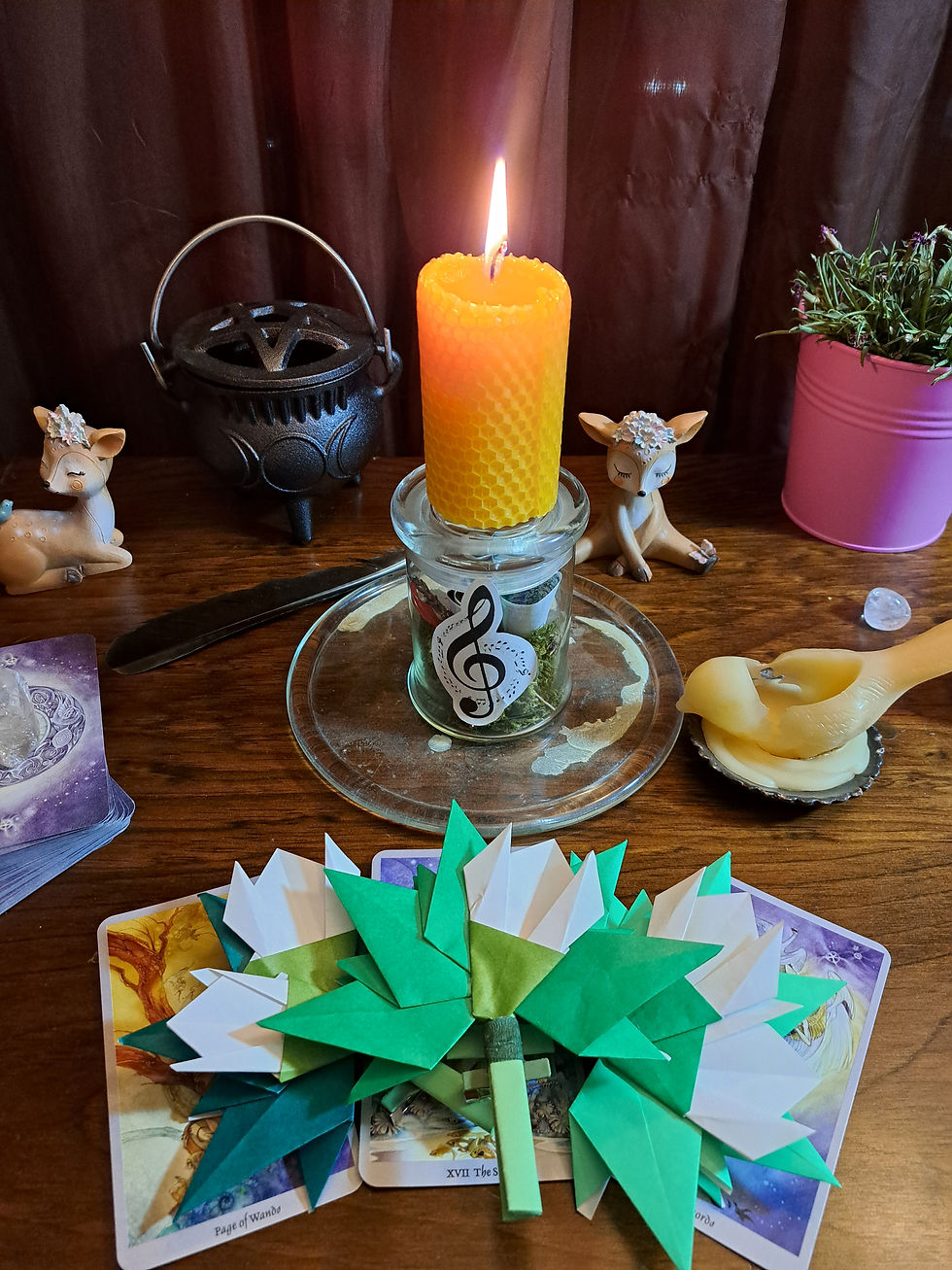
Armed with two separate, large, period lists of Victorian flower language meanings, and a Google search bar pre-loaded with "origami pattern -ai" we ultimately settled on creating origami talking bouquets (aka tussie mussies, aka nosegays) for all of our attendees. Each nosegay was comprised of oak leaves for bravery, and snowdrops for hope. Those seemed like attributes worth carrying with us at this point in history, but also at this point in the Wheel.
As I started to write, I found myself favoring the descriptive term, "nosegay" for these little boutonnieres we were building. Of course, what they described was a pleasant scent that would make your nose happy--and ours smelled of nothing but paper and glue. It was upon this realization that the ritual really took shape.
On the day of our Ostara ritual we gave out the origami nosegays, along with an explanation of both their meaning, and the Victorian tradition that inspired them. Then we passed around 3 bottles of essential oils, inviting each participant to add a drop of from each vial to the back of their nosegay. First, a drop of vetivert for luck and hex-breaking. Next, geranium for good health and warding off snakes both literal and metaphorical. And finally lavender for comfort and peace. After each tussie mussie was scented, we asked the Lord and Lady to bless the nosegays, that they would lift the wearer up when they are down, and protect them from those that would do them harm.
After ritual, we spent the afternoon enjoying our floral delicacies, and one another's good company. Although we made the nosegays as boutonnieres, in case anyone wanted to wear them, I've been carrying mine in a side pocket of my purse. Every time I see it, or catch a whiff of the oils we used in ritual, I am bolstered for whatever the day may bring.

Comments