

The Language of Flowers
- Feb 27
- 2 min read
I first encountered the idea of floriography, better known as "Victorian flower language," in A Victorian Grimoire by Patricia J. Telesco. The editing, formatting, and general tone betray the book's early 90s origins, and it doesn't cover any particular area in any depth. Of course, the Victorians had an obsession with mythology and the occult, so perhaps it is not reasonable to expect a single book to contain all there is to know about every piece of Victorian culture that even tangentially related to magic. Nonetheless, it was within the pages of that book that my fascination with the symbolism of flowers began
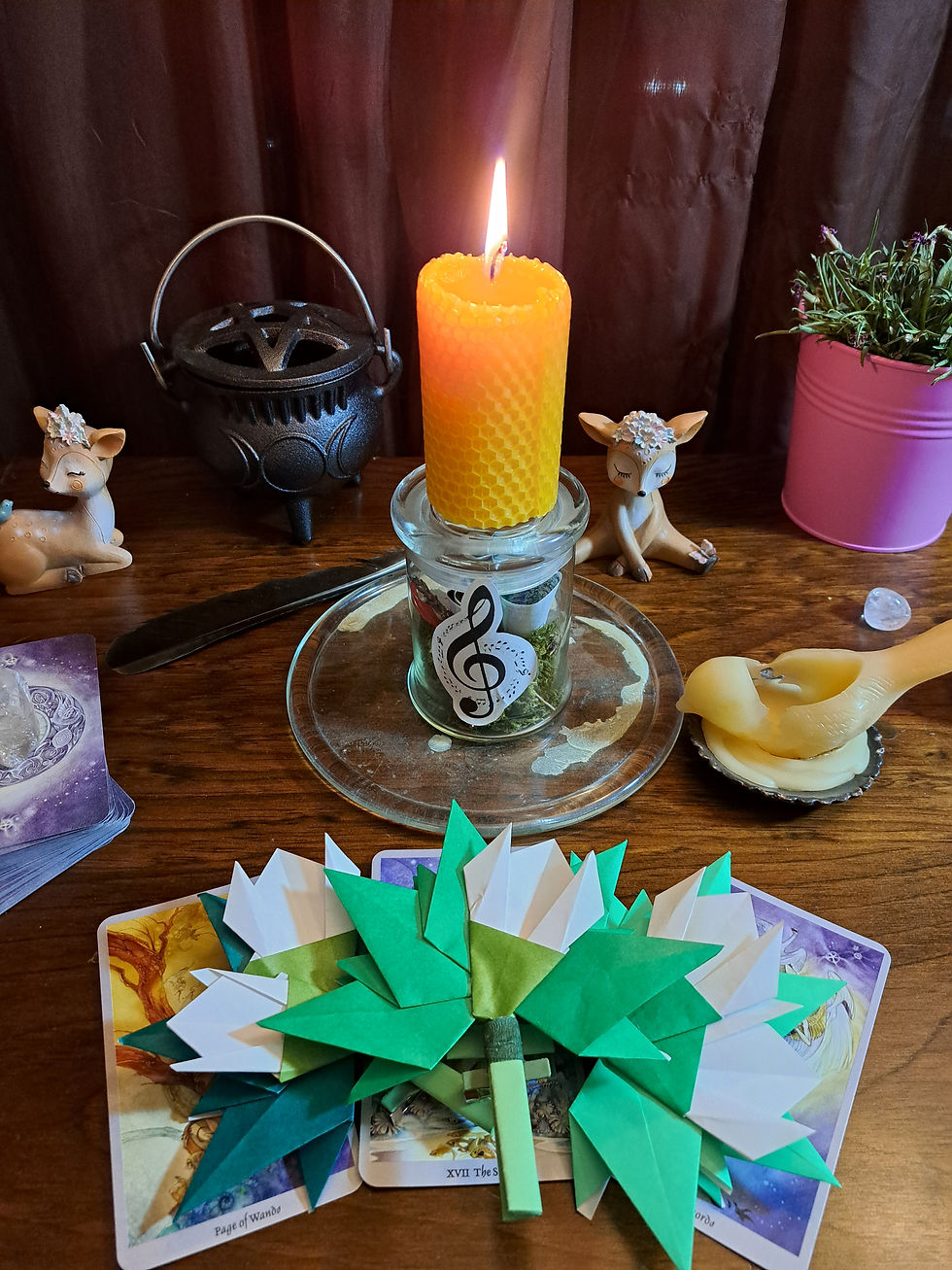
Of course, in retrospect, that wasn't remotely my first encounter with flowers as symbols. In modern culture roses (particularly red roses) still represent romantic love. And I distinctly remember buying and selling carnations as a school fundraiser, carefully considering which color to send to whom, lest my intentions be misinterpreted. There are still flowers we deem appropriate for weddings, but not for funerals, and vice versa. The list goes on. In the Victorian era, however, people would exchange and wear small, carefully considered and arranged "talking bouquets," to convey simple messages, usually to do with romance. The talking bouquet pictured here would tell the recipient what the giver admired about them and--perhaps most importantly--that these fine qualities have induced a feeling of love in the giver.
Of course, for these floral messages to be effective, everyone involved needs to know what each flower means. At the very least, everyone needs to know that the flowers mean something, and where to look up those meanings.

Today most people wouldn't know a bouquet that said "I love you" from a bouquet that said "Go to Hell." However, that doesn't mean this flower language can't be put to good use in the modern day. Much of the magic we work relies on symbols and correspondences, and while we can always decide upon our own, new analogies and parallels there is something to be said for repeating patterns. Place the wheels of your cart in the grooves already in the road, and you will get where you're going faster, and with much less effort than if you tried to pull your cart across an overgrown field. So it is with magic and the grooves of the universe.
Though we no longer use these subtle floral meanings to send messages in society, we can still use them to send messages to the universe. Drink to your health with tea brewed with Icelandic moss. Place a bouquet of osmunda and scarlet geranium on your nightstand to ward against bad dreams. Ward your home with a bouquet of traveller's joy and french-willow near your front door. The possibilities are endless!
For a list of flower correspondences check out this other Victorian era book, also available through Project Gutenberg.
Comments