

Sacrifice in the Modern Age
- Acorn
- Jul 24
- 4 min read
Updated: Nov 30
Reflecting on the Whys and Wherefores
And when the corn has ripened, what is the sacrifice? ...Life gives itself to Life, the strain of challenge, the blood we shed for the sake of those who will come after. ~ Keith Campbell, 3° Blue Star Ancestor
Similar to the topic of sexuality and fertility earlier in the year, at Lammas Wiccans look to acknowledge sacrifice as it exists within the cycle, the world, our communities, and in ourselves. As described in our Lammas Work, we believe that in the Autumn, the God of the harvest dies once more, that we may eat and consume Him in the form of the harvest feast, giving us strength in the months to come. In acknowledging the abundance of the fields, we also acknowledge those that work to plant, tend, and harvest the crops that we partake in; those who sell it to us; those who prepare that which we have not, and so on. This is not the end-all, be-all on how people celebrate Lammas, of course! And, there is much to be said about sacrifice in the modern age of paganism.
On the broader topic, I'd like to establish first that while human sacrifice existed for a large portion of human history, it is NOT considered a modern practice by any modern sect of Wicca (or really any practice I've heard of, but let's assume I haven't heard of everything). "An it harm none, do what ye will," the Wiccan Rede implores us, a fairly simple philosophy to work with, even if you don't ascribe to the whole Rede (read more: The Wiccan Rede: A Historical Journey by John J. Coughlin).
Joseph Watts (lecturer in religious studies at the University of Otago) and his colleagues at the University of Auckland and elsewhere have studied a ‘social control hypothesis’ regarding human sacrifice, in which, "Human sacrifice is proposed to have been used by social elites to display their divinely sanctioned power, justify their status, and terrorise underclasses into obedience and subordination. Ultimately, human sacrifice could be used as a tool to help build and maintain systems of social inequality" [sic] (How human sacrifice helped to enforce social inequality, June 8, 2016).
For this and all the other, more obvious reasons, if someone is talking in present tense about planning and partaking in a human sacrifice as part of a Wiccan rite, I give you banket permission feel free to tell that person off and do what you'd like to alert your local community.
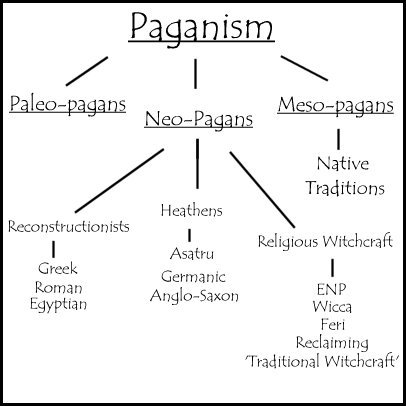
The topic of animal sacrifice is more nuanced and less straightforward, in that there isn't a clear consensus between different practices under the great umbrella of "Pagan." To help add some context, let's break down what sacrifice actually means.
John Beckett (Druid and the Coordinating Officer of the Denton Covenant of Unitarian Universalist Pagans) says, "The common meaning of sacrifice is 'to give up'...The older meaning of sacrifice is 'to make sacred'" (A Modern Pagan View of Sacrifice, 2013), a practice in dedicating an object to the Gods through ritual and ceremony, giving it new purpose. By making an object sacred and imbuing it with the divine essence of the Gods, it may be able to return some of that essence to us when we interact with the object.
Sometimes objects are "sacrificed" in their transformation by no longer being used for their original purpose. For our Beltane Work, a tambourine is changed from an instrument meant for everyday use, into an energetic charm that would inspire us to work on an associated project when we danced with it and listened to its music.
Sam Webster (M. Div., Mage; Adept of the Golden Dawn, etc.) adds an extra layer by stating that the purpose of sacrifice is, "...to build, maintain, and correct our connection with the Gods..." (Toward the Pagan Restoration of Sacrifice, 2013). In this light we understand that the sacrifice is not just the musical instrument, but also our time and energy in using the charm after we charge it. Believing in the Gods is how They thrive; They love it when we think of and interact with Them!
Back to the topic of animal sacrifice - Webster argues, "Animal sacrifice should be on the table at least for the meat eaters, at least once in life. (It feels to me like there is a moral obligation in there because I eat meat.)" Counter-point comes from Beckett, who retorts bluntly, "Regardless of your intentions, I don’t recommend animal sacrifice."
(To be clear, Blue Star has no official stance on this issue. How you and your teacher decide to go about your practice is a conversation that should be done intentionally and with open eyes, regardless of the topic!)
The "sacrifice" of a musical instrument that you may have purchased with the express intent of using for a magical charm may not have even registered on the "give up" aspect of sacrifice - the same way the sacrifice of our autonomy in order to belong and thrive in our households and communities rarely does.
You are seen and heard in this world! Every time you interact with another person, you are given the chance to show your worthiness in both giving and receiving the sacrifice of another's time and attention. It is so important to understand that you do not want to "belong" or be accepted by everyone. Wiccans will say, "know thyself" as shorthand for the ongoing work of all religiously mature people who strive to bring their everyday, secular activities into accordance with their core values and spiritual experience. Beware the Paradox of Tolerance no matter what the arena! You owe yourself peace, safety, and balance in exchange for your everyday sacrifices.

However you may choose to celebrate during this season of thanks-giving, I know there is someone out there who is giving thanks for you, just as I give thanks for those in my life, whether I know their given names or not. It is in holding value in their sacrifice that we can appreciate the value in our own, this year and every year after. So mote it be!
Blessed Be,
by Acorn, 1°


Comments